



Governance in the Age of Intelligent Risk: The Future of GRC in Financial Services
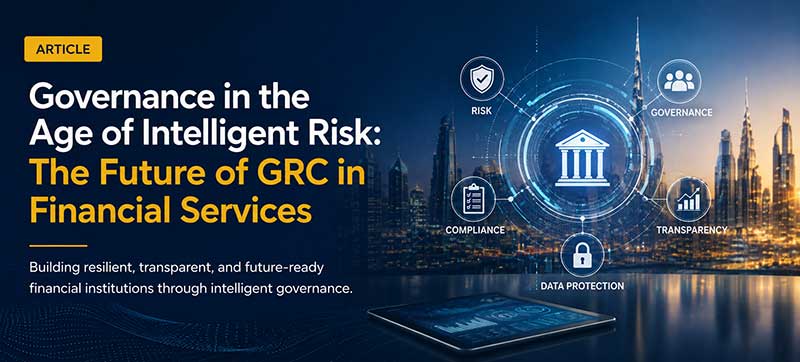
Over the past several years, I have had the opportunity to work closely with financial institutions across the Middle East, Europe, and APAC on governance, risk, and compliance initiatives. Through these engagements, one trend has become increasingly clear: the role of GRC in financial services is evolving rapidly. What was once viewed primarily as a compliance requirement is now becoming a strategic capability that supports resilience, transparency, and informed decision-making.
In the UAE and across the GCC, financial institutions are operating in an environment shaped by digital transformation, increasing regulatory expectations,and complex operational ecosystems. These changes are pushing organizations to rethink how governance frameworks are structured and how risks are managed across the enterprise. From my experience, one of the biggest challenges organizations face today is not understanding regulations-it is demonstrating how governance works in practice.
Policies and procedures may be well documented, and risk frameworks may be in place, but regulators and stakeholders increasingly expect clear evidence of how governance processes operate over time. They want visibility into how risks are identified, how decisions are made, and how controls are monitored across the organization. This shift is encouraging institutions to move toward more structured and evidence-driven governance models.
Historically, risk and compliance functions relied on manual processes, periodic reviews, and fragmented reporting. While these approaches helped maintain baseline compliance, they often struggled to keep pace with the complexity and speed of modern financial systems. Today, boards and regulators expect continuous visibility into risk exposure and stronger traceability in governance activities.
Technology is playing an important role in enabling this transition. Advanced analytics and artificial intelligence are helping organizations analyze large volumes of operational and transactional data, allowing risk teams to identify emerging patterns and potential risks earlier. Rather than relying solely on static risk registers, institutions are gradually moving toward more dynamic risk monitoring approaches.
At the same time, the use of intelligent technologies introduces new governance responsibilities. Organizations must ensure that AI-driven insights remain transparent, explainable, and aligned with regulatory expectations. Strong governance frameworks are therefore essential to maintain accountability, oversight, and clear audit trails.
Another important lesson from enterprise GRC implementations is the value of integrated risk management. Operational risk, cybersecurity threats, third-party dependencies, and regulatory compliance are increasingly interconnected. Managing these risks in isolation can create gaps in visibility and oversight.
Organizations that adopt integrated governance frameworks are better positioned to understand risk relationships, improve decision-making, and strengthen resilience. In an increasingly complex regulatory landscape, effective governance should not slow organizations down-it should provide the confidence and structure needed to move forward responsibly.
About the Author:

Rajeev Dutt
Managing Director - MEA and APAC, Swiss GRC
Rajeev Dutt
Managing Director - MEA and APAC, Swiss GRC
